AI Design Agents' Clip Art Tool
🌱 First look
A single early observation. Treat it as a lead, not a conclusion. I tried one prompt once; I need more runs before drawing a conclusion.
The short version
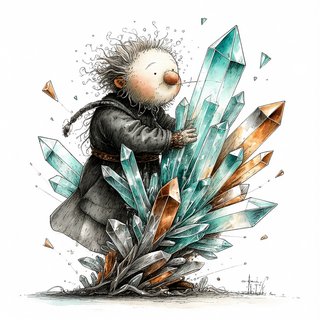
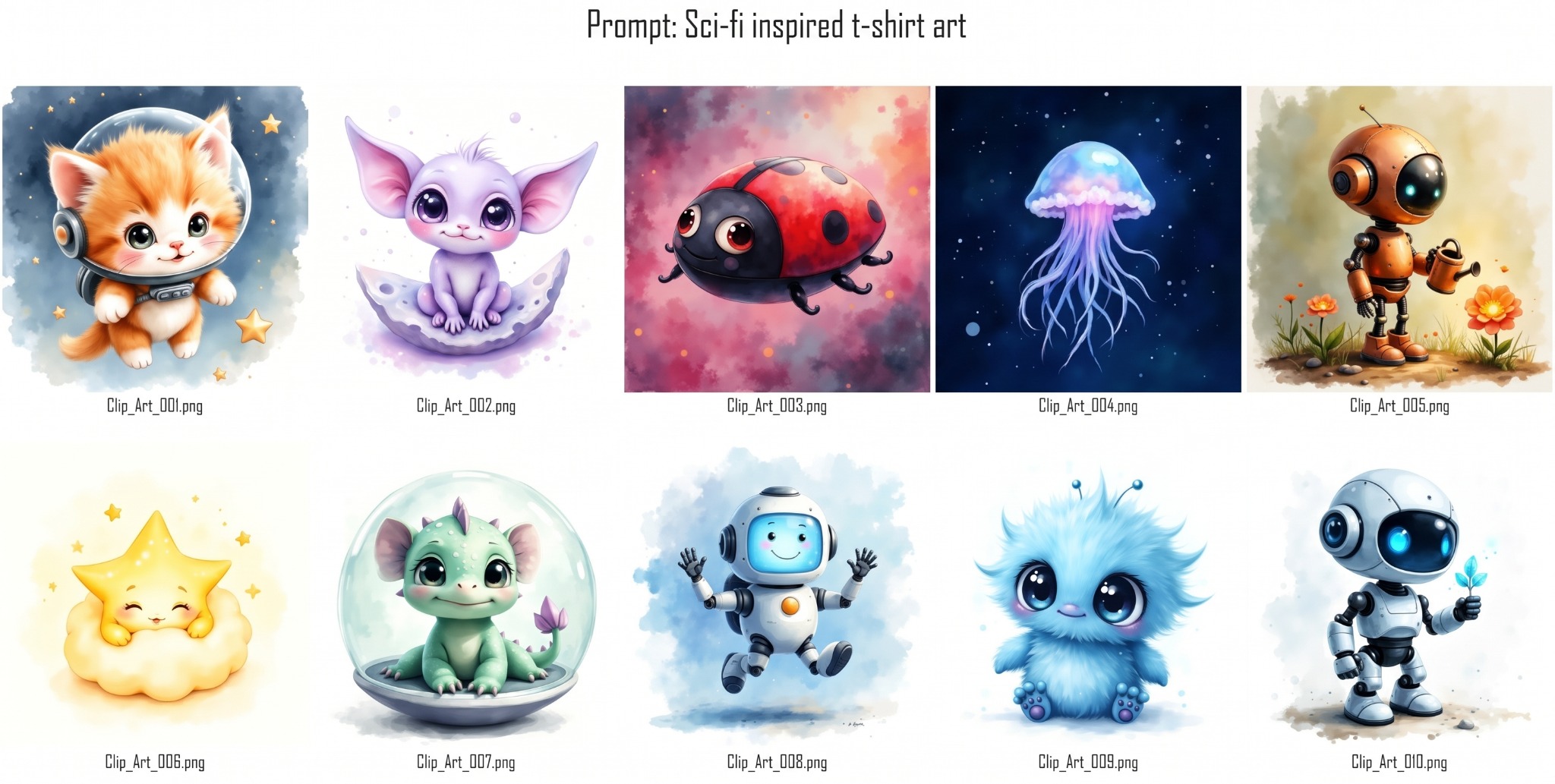
In this run, Clip Art turned one short request into ten different prompts before generating images. All ten came back as soft watercolor scenes, so asking for t-shirt art did not produce clean, isolated designs ready to print.
The evidence
Try it yourself
- Tool: AI Design Agents: Clip Art
- One short input prompt; the tool generated ten rewritten prompts and one image per rewrite.
- Aspect ratio and other toggles: not recorded.
How could someone else try this?
Submit the same short prompt to Clip Art and see what 10 sub-prompts it writes this time; they may not match mine, since the rewrite step seems to vary run to run. Score each resulting image on subject fidelity to its own rewritten sub-prompt, then separately score whether it would actually work as isolated t-shirt art (clean edges, minimal or no background, one clear subject). Try a more literal, tightly structured prompt next and see whether that reduces how much Clip Art rewrites it.
What I found
- One prompt became ten. The tool rewrote the request into different character and creature prompts without offering a preview or a way to edit them.
- Every image used a similar watercolor look. The outputs had soft edges, pastel washes, and full backgrounds rather than bold, isolated subjects.
- Cute portraits did not mean printable shirt art. None of these ten images read as usable t-shirt clip art to me. Other wording and repeated runs still need testing.
How I tested
Study recorded: September 27, 2026
One prompt submitted: 'Sci-fi inspired t-shirt art'. Clip Art rewrote it into 10 sub-prompts on its own before generating, a rewrite step you don't control or see in advance:
- A cute baby astronaut kitten wearing a miniature glass helmet, floating weightlessly. Its fur is a soft ginger, rendered with delicate watercolor textures, and its paws reach toward a tiny floating star. The palette consists of soft navy, peach, and starlight gold.
- A whimsical little alien creature with three soft, glowing eyes and long, floppy ears, sitting on a pastel-colored moon fragment. Its skin is a gentle lavender watercolor wash with subtle speckles of light, looking shy and sweet.
- A small, round spacecraft shaped like a ladybug, painted in soft watercolor reds and blacks, drifting through a nebula of pink and teal. The ship has a tiny, glowing porthole and a friendly, non-threatening design.
- A tiny, glowing jellyfish-like creature floating through deep space, its tentacles trailing like soft silk ribbons. Painted in ethereal watercolor shades of cyan, violet, and translucent white, creating a dreamy, bioluminescent effect.
- A miniature retro-futuristic robot gardener with a small watering can, tending to a glowing crystal flower. The robot has a soft, weathered copper texture rendered in warm watercolor tones, with gentle light reflecting off its metallic surface.
- A sleepy little star-spirit shaped like a soft, glowing cloud, wearing a tiny nightcap. The character is painted in pale lemon yellows and soft creams, with gentle watercolor shading that makes it look fluffy and magical.
- A cute, wide-eyed baby dragon with iridescent scales, sitting inside a small, high-tech floating pod. The scales are rendered in soft watercolor transitions of mint green and lilac, with a gentle, curious expression.
- A tiny, friendly satellite with small, waving mechanical arms, painted in soft pastel blues and whites. It has a smiling digital face on a small screen, surrounded by soft watercolor washes of cosmic dust and stardust.
- A small, whimsical alien pet that looks like a fluffy blue pom-pom with large, expressive eyes and tiny antennae. The texture is created with soft, layered watercolor strokes in shades of sky blue and periwinkle, looking incredibly soft and huggable.
- A tiny, friendly robot explorer with round, glowing blue eyes and a polished silver body, painted in soft watercolor washes of metallic blue and slate gray. It holds a small, glowing holographic plant, looking on with wonder. The style features gentle wet-blended gradients and soft, dreamy light effects.
Each sub-prompt produced one image. Reviewed on two criteria: does the image match its own rewritten sub-prompt, and would the image work as isolated print-ready art (clean edges, no complex background, one focal subject)?
What I’m not sure about
This is a single-prompt, single-run observation, not a controlled study - I haven't repeated it to see how much the rewrite step varies from run to run.
A key limitation of the tool itself, not just this test: the 10 sub-prompts are invisible and uneditable. There's no way to preview, adjust, or skip the rewrite — it's baked into how Clip Art works, not an optional pass you can turn off. You only see what it rewrote your prompt into after the images come back, by viewing the sub-prompts from detail modals in your Personal Designs library (as I did here). That means a user has no direct way to steer subject matter or style through the initial prompt alone — "sci-fi inspired t-shirt art" and a more literal, structured version of the same idea could both get run through the same opaque rewrite and come out looking similar, and there's currently no way to test that without just trying it.
Scoring was done by eye against two criteria (fidelity to the rewritten sub-prompt, and viability as isolated print-ready art) - there's no objective pass/fail threshold, so "none of them read as usable t-shirt clip art" is a judgment call, not a measured score. I also haven't yet tested whether prompt phrasing (e.g. "flat vector," "isolated on white," "bold outline") has any effect on the rewrite or the output style, since the rewrite's inputs and logic aren't exposed — that's the follow-up test described in Try it yourself, and until it's run, the "not built for printable t-shirt art" conclusion is provisional.
This study needs a lot more follow-up.
Community results
Reviewed observations from people who ran their own version of this test, with their prompt and evidence.
Tried this yourself? Report your result →